Tree Frog Basics
Everything you need to know about Tree Frogs
Origin
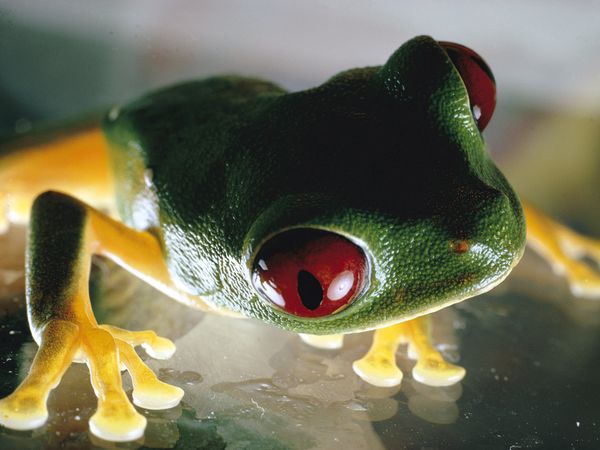
Many scientists believe the red-eyed tree frog developed its vivid scarlet peepers to shock predators into at least briefly questioning their meal choice.
These iconic rain-forest amphibians sleep by day stuck to leaf-bottoms with their eyes closed and body markings covered. When disturbed, they flash their bulging red eyes and reveal their huge, webbed orange feet and bright blue-and-yellow flanks. This technique, called startle coloration, may give a bird or snake pause, offering a precious instant for the frog to spring to safety.
Their neon-green bodies may play a similar role in thwarting predators. Many of the animals that eat red-eyed tree frogs are nocturnal hunters that use keen eyesight to find prey. The shocking colors of this frog may over-stimulate a predator's eyes, creating a confusing ghost image that remains behind as the frog jumps away.
Red-eyed tree frogs, despite their conspicuous coloration, are not venomous. They are found in tropical lowlands from southern Mexico, throughout Central America, and in northern South America. Nocturnal carnivores, they hide in the rain forest canopy and ambush crickets, flies, and moths with their long, sticky tongues.
The green tree frog is also native to the south-eastern parts of the United States. They are commonly seen in Florida, South Carolina, Arkansas, and southern Georgia in the local shrubbery of the neighborhoods. They can be heard calling at night in the spring and early summer along side lagoons and ponds. They are a simple yet attractive frog that can make an interesting and neat but easy to care for pet.
Diet
Tree frogs will eat flies, moths, crickets, grasshoppers, and possibly other small frogs.
To learn more about owning and caring for a tree frog here.